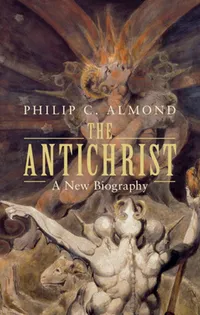
The Antichrist: A New Biography
In December 2025, I was at the Gaudeamus Bookfest in Bucharest, where I picked up this book because I thought it would be interesting to find out more about the Antichrist throughout history.
The book didn’t entirely meet my expectations. It was an okay read, but at times, it seemed as foggy and hard to decipher as the Book of Revelation/the Apocalypse, which it references.
I’m exaggerating here, the book is very well documented. I just feel that the beginning jumps around when it comes to an actual timeline, making it hard to follow.
It’s interesting to see how the Book of the Apocalypse is interpreted in so many different ways by people in different times. Everyone tries to figure out what year the Beast will come, who it is going to be, and when Christ is going to come back and defeat Evil once and for all. (Well, actually, it’s not once and for all, it seems like it will be only for 1000 years).
An entire debate has gone on over the years to decide who the Antichrist is: Is it a person? Is it a group? Is it just anyone who is anti-Christianity? Because there is no concrete data in the Book of the Apocalypse, everything is open to interpretation.
In the end, two ideas prevail, and they have been present until modern days:
- The Antichrist as a single person from outside the Church who is coming to bring evil and deceive everyone into believing that he’s the chosen one. Adso of Montier-en-Der is the one who came up with this version.
- The Antichrist as someone from inside the Church, a pope, who is going to make everything rot from the inside. Joachim of Fiore is the one who came up with this idea.
These two ideas are going to be used by a lot of people to speculate on, for political and religious reasons.
From Nero to Napoleon, a number of historical figures are identified as the Antichrist, depending on who you ask and what their motives were. Christians call Muslims the Antichrist, Protestants claim that Rome and the pope are the Antichrist, the Church labels the French Revolution and Illuminism as the Antichrist… You see the pattern.
If in the first centuries, a genuine interest existed in understanding the Book of the Apocalypse, past the 12th century, it seems it was all about who would benefit from one view or the other.
The book ends with a nice thought: that maybe all of this is a metaphor for a war that is taking place inside us between good and evil, and not a literal end of the world. We need to bring more good into the world.
Oh, and I will never forget the word “eschatological,” as it was present on every other page of the book.
Description
This description is grabbed from Google Books or GoodreadsThe malign figure of the Antichrist endures in modern culture, whether religious or secular; and the spectral shadow he has cast over the ages continues to exert a strong and powerful fascination.
Philip C. Almond tells the story of the son of Satan from his early beginnings to the present day, and explores this false Messiah in theology, literature and the history of ideas. Discussing the origins of the malevolent being who at different times was cursed as Belial, Nero or Damien, the author reveals how Christianity in both East and West has imagined this incarnation of absolute evil destined to appear at the end of time.
For the better part of the last two thousand years, Almond suggests, the human battle between right and wrong has been envisaged as a mighty cosmic duel between good and its opposite, culminating in an epic final showdown between Christ and his deadly arch-nemesis.